R
rayden waller
0 팔로워
·
0 팔로잉
# Coloring pages you repeat: Enjoy another go without a comparison
**Repeating a familiar drawing can be an activity you want, without becoming a test of whether your work has improved. You may like a bird's broad shapes or want more time with a recognizable scene. That is enough reason to repeat a permitted use, whether you found the design in a book or among [free coloring pages](https://potofu.me/freecpcofficial) online. Choose how much of the earlier idea you welcome, leave the rest open, and let the current sheet stand on its own. You do not need to arrange the versions together or decide which one is better.**
## 1\. Choose why you want to repeat coloring pages
Once you have decided to repeat a design, identify what still appeals. A present reason can guide this turn without asking it to demonstrate progress.
### 1.1 Return for a subject or experience you still want
Suppose the broad wing shapes in a bird drawing invite another turn. You may want to revisit the body, enjoy the recognizable outline, or spend more time with the same subject. Name the part of the experience you want today.
If you still want this particular activity, that is a complete purpose for repeating it.
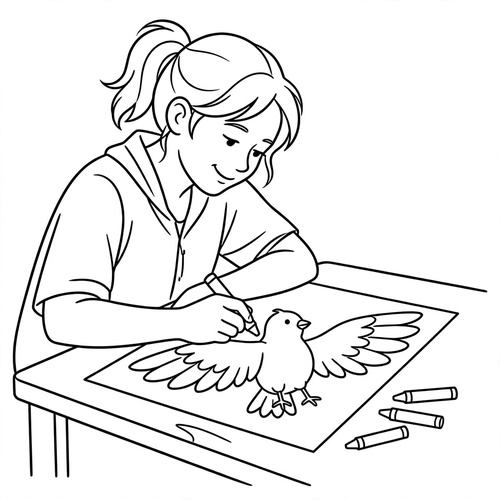
Happily coloring familiar bird with broad wings again
### 1.2 Leave improvement out unless it is your own purpose
Ask whether you would still want this turn if nobody compared the sheets. If the answer is yes, the familiar subject already gives you a clear reason to continue. If you independently want to explore an idea, name the question you find interesting.
Those purposes lead to different activities, so choose the one you want before beginning.
## 2\. Decide what to carry from the earlier use
A remembered choice can be an invitation rather than a recipe. Decide what you welcome from the earlier activity and what you would prefer to leave open. The same principle applies when you return to a familiar design through **[printable coloring pages](https://forums.prosoundweb.com/index.php?topic=181364.0)** and want the new session to remain flexible.
### 2.1 Keep a remembered choice when you still want it
Suppose you remember using one color across the bird's broad body and a contrasting color on its wings. Identify what you liked about that choice. Perhaps you simply enjoyed the contrast.
If you still want that relationship, retain that single idea rather than rebuilding every previous decision. If a particular color was what you enjoyed, keep that instead.
Before continuing, you can ask:
* Which earlier choice do I genuinely want to repeat?
* Which areas would I rather leave undecided?
* Do I need the old sheet in view, or is memory enough?
* What part of this session should remain open?
### 2.2 Let a previous result stay out of the way
If the earlier colored sheet keeps drawing your attention away from the current picture, put it face down or move it aside. Keep the new permitted instance where you can inspect its uncolored shapes directly.
Bring the earlier result back only when there is a specific detail you want to consult.
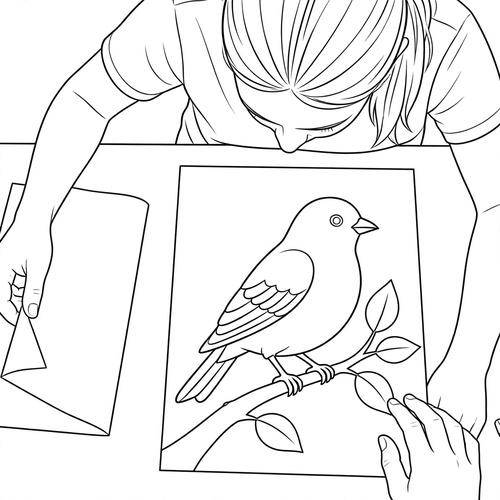
Placing old bird page aside to start fresh copy of bird
## 3\. Let this use have its own decisions
The current drawing can contain remembered choices, independent decisions, and areas left open without becoming a comparison exercise.
### 3.1 Begin with what interests you in the drawing today
Inspect the current drawing before deciding where to begin. Perhaps a leaf beside the bird has a broad interior that appeals more than the smaller surrounding shapes. Begin with the area you actually want to use.
If several areas appeal, choose the one you feel ready to work on first and leave the others available. You can reassess after that area rather than deciding the whole sequence now.
### 3.2 Let unchanged and changed choices coexist
As you move through the drawing, make each next decision when it becomes useful. You might use the remembered body-and-wing contrast, then choose the nearby leaves independently. When you reach the background, decide whether you actually want to work there.
One evening, someone returned to a bird page they had colored months earlier. They remembered liking the contrast between the body and wings, so they kept that idea. This time, however, they began with the leaves and left the background untouched. The session felt familiar without becoming a copy, and no comparison was needed to make it worthwhile.
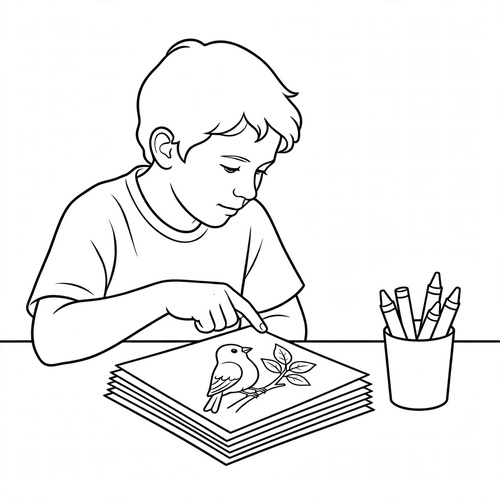
Choosing bird sheet from stack pointing at leaf area
## 4\. Respond when repeating is not currently workable
Before preparing another instance, check that the intended use is currently workable. Familiarity with a design does not establish its availability or the details of another use, even when you encounter it among **[free coloring pages pdf](https://ko-fi.com/post/printable-coloring-pages-that-hide-tiny-stories-in-R1C221OR37 )** resources.
### 4.1 Check access and permission before another copy
Before preparing another copy, identify the action you intend. You may want to open the offered file and print one sheet for your own activity. Return to the actual resource and check current availability, the offered format, any paper guidance, and the stated use details for that action.
If an essential detail is unclear, hold that action while seeking clarification or choose a clearly supported option.
### 4.2 Choose a different activity only if it appeals
If the exact repeat is not workable, choose an alternative according to what attracted you. When the familiar broad shapes matter most, another accessible, permitted design may suit the activity. When your interest was in this particular subject, a different activity may appeal more than a substitute drawing. If neither option attracts you, stop there.
## 5\. Return to the source through ColoringPagesCreative
ColoringPagesCreative offers homepage collections and discovery sections for exploring coloring pages. A retained reference can take you toward the individual resource for a familiar drawing, while browsing is useful when you want another option.
Inspect the actual line drawing for the arrangement that attracted you, such as broad wings beside separate leaves, rather than recognizing only its general subject. Use the practical resource check above before preparing a copy.
### 5.1 Use a retained resource reference when you have one
Open a retained reference when you have one and inspect the individual line drawing. Confirm the arrangement you meant to revisit. A bird beside two separate plants differs from a bird inside a dense scene, even though the subject name matches.
Look at the broad areas or recognizable outlines that mattered to you.
### 5.2 Browse for another option only when you want it
If you want an alternative, browse the discovery sections with the feature you still value in mind. Broad enclosed shapes, for example, may matter more than finding another bird. Inspect a promising drawing and decide whether its arrangement supports that purpose.
Apply the same resource check to the newly selected option before use; details from the first design do not transfer automatically. End the search when you have a wanted, usable option or when no candidate appeals.
## 6\. Let this turn stand on its own
Return to coloring pages for something you still want to enjoy. Use a permitted instance of the familiar design, keep any remembered idea you welcome, and leave other decisions open.
A repeated page does not need to document improvement, prove greater skill, or become part of a side-by-side comparison. It can simply offer another period of attention to a subject, shape, or arrangement you still enjoy. Let this turn stand on its own without deciding that one version has to be better than another.
**See It Here:**
**[Free Printable Coloring Joy Grows with ColoringPagesCreative](https://www.facebook.com/coloringpagescreative/)**
**[Coloring Sheets To Print Out That Turn Boredom Into Bright Ideas](https://www.boygeorgefever.com/members/profile/3818793/raydenwaller.htm)**